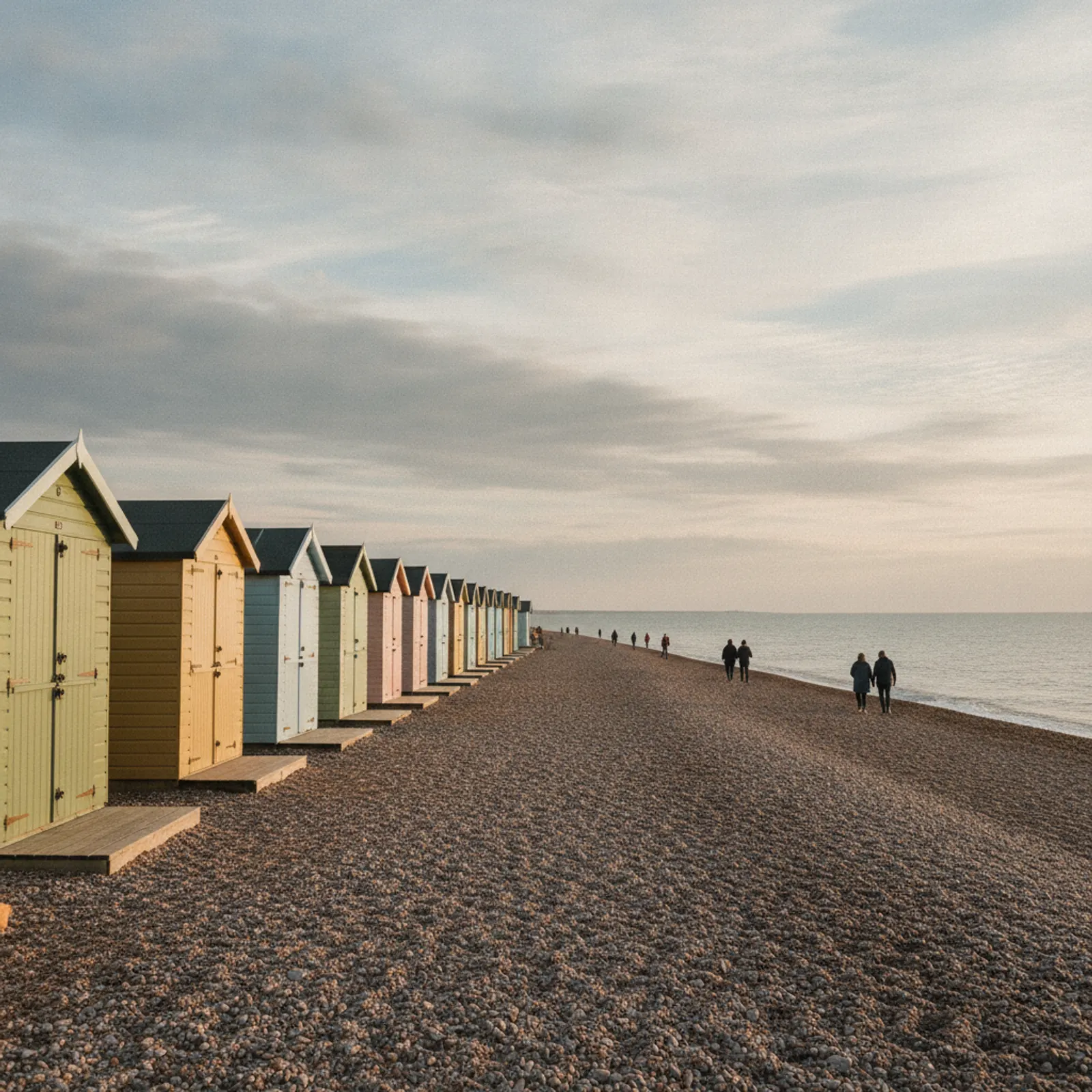
From Felixstowe up to Lowestoft, the Suffolk coast is full of holiday cottages, apartments and converted barns. Most owners list on at least one of the big booking platforms, and most would like more bookings to come direct. Each direct booking avoids the platform's commission and puts you in touch with a guest who may return year after year.
Search is one of the main routes to direct bookings, but holiday lets face some particular challenges. Here is what we have seen work for owners in Southwold, Aldeburgh, Walberswick, Thorpeness and the villages inland.
Accept that you will not outrank the platforms for broad searches
A search like "holiday cottages Suffolk" is dominated by large platforms and agencies with thousands of properties and enormous websites. A single property, or even a small portfolio, will rarely beat them for that kind of search. That is fine. The searches worth winning are more specific, and there are many of them.
- "dog friendly cottage Southwold"
- "holiday let near Snape Maltings"
- "cottage with hot tub Suffolk coast"
- "family holiday home Aldeburgh sleeps 8"
- Your property's own name, which matters more than most owners realise.
Guests who search like this know what they want. They are also the guests most likely to book direct if they find a good site.
Make each property page do its job
Many holiday-let websites give each property a gallery and a booking calendar, with a few lines of text. That gives Google very little to understand and guests little reason to choose you. A strong property page includes:
- A clear description of the property, its layout and how many it sleeps.
- What makes it different: the view, the garden, the walk to the beach, the wood burner.
- Practical details guests search for: parking, dogs, Wi-Fi, accessibility, EV charging, cots and high chairs.
- Distances to places people care about: the beach, the pub, the pier, Minsmere, Dunwich Heath, Sutton Hoo.
- Honest photos with descriptive file names and alt text.
- Prices or a clear sense of price range, and how to book.
Fix your booking engine's side effects
Booking systems often generate a separate URL for every date range, filter or search on your site. To Google, these can look like thousands of near-identical pages. That wastes crawl attention and can stop your main property pages ranking well.
Signs of this include a Search Console report showing far more pages than you have properties, or lots of URLs with dates and parameters in them. The fixes depend on the system but usually involve canonical tags, blocking unnecessary parameters and making sure only the main pages are submitted in your sitemap. This is a technical job, but it often makes a noticeable difference.
Write about the area, properly
Guests spend weeks planning a trip. They search for things to do, places to eat, walks and events. If your site answers those questions, you reach them earlier, and you build the kind of content other sites link to.
Good topics for the Suffolk coast include:
- A visitor's guide to the Aldeburgh Festival, which Benjamin Britten co-founded, and the Aldeburgh Food and Drink Festival at Snape Maltings.
- Walks from your door: the coastal path, the walk from Southwold to Walberswick, the shingle at Orford Ness.
- Dog-friendly beaches and seasonal restrictions.
- Birdwatching at RSPB Minsmere.
- Rainy-day ideas, which people search for more than you might think.
Write from experience. Generic "top ten things to do" lists are everywhere. Your knowledge of which café is best for walkers, or the best spot to watch the sun rise over the sea, is what makes a guide worth reading.
Plan around the seasons
Search interest for the coast rises in the new year as people plan summer holidays, peaks again in spring, and spikes around school holidays and events. Content takes time to rank, so publish seasonal guides several months before the season they cover. A guide to Christmas on the coast belongs online by early autumn, not in December.
The quieter months are worth targeting too. Off-season breaks, winter walking and birdwatching weekends can fill gaps in the calendar, and there is often less competition for those searches.
Use Google Business Profile where it fits
Google allows holiday rentals to have a Business Profile in some circumstances, and Google also displays vacation rental listings directly in search and Maps through approved partners. If your booking system or channel manager supports Google's vacation rental integration, it is worth investigating, because it puts your property in front of people searching for places to stay with a link to book direct.
Earn local links
Links from local tourism sites, event organisers, walking groups and local food producers you recommend help your site look established. Many of these are easy to get once you have useful content to point to. A well-written walking guide is something a local walking group might happily link to.
Measure direct bookings, not just traffic
Set up analytics so you can see which searches and pages lead to bookings, not just visits. Many booking engines can pass conversion data into Google Analytics. That shows you which properties and content are earning their keep and where to focus next.
In summary
Focus on specific searches, build rich property pages, fix booking-engine duplication, write genuinely useful local guides ahead of the season and track bookings. That combination steadily shifts the balance toward direct bookings without fighting the platforms on their home ground.
If your site needs a technical tidy-up first, our technical SEO service covers booking-engine fixes. Area-specific advice is on our Aldeburgh and Southwold page.
A pre-season checklist for holiday let websites
- Each property has its own page with a unique description, not just a booking widget.
- Page titles include the property type and town, such as "Dog-friendly cottage in Southwold".
- Photos are compressed, named sensibly and have descriptive alt text.
- Prices, availability and minimum stays are accurate for the coming season.
- Location content explains what is nearby: beaches, pubs, walks, Minsmere or Snape.
- The direct booking route is clear on mobile, with no more steps than a platform listing.
- Your Google Business Profile, if you have one, matches the website exactly.
- You have asked recent guests to leave a review, without offering anything in return.
Comparing booking platforms and your own site
| Booking platforms | Your own website | |
|---|---|---|
| Visibility | High for broad searches | Builds over time, strongest for specific searches |
| Commission | Charged on each booking | None, beyond payment processing |
| Guest relationship | Owned by the platform | Owned by you |
| Control over content | Limited | Complete |
Most owners use both. The aim of SEO is to make your own site strong enough that returning guests and people searching for specific properties book with you directly.
Content ideas that bring direct bookings
- A guide to dog-friendly beaches and pubs near your property.
- Walking routes from the door, with distances and map links.
- What is on each season: Snape concerts, the Food and Drink Festival, winter birdwatching.
- Practical information: parking, nearest shop, accessibility, and the best time to visit.
The takeaway: platforms win broad searches, but you can win specific ones. Detailed property pages and genuinely useful local guides are what bring guests to your own site.
See our page on Aldeburgh and Southwold, and our SEO content service.